
Elk Grove City Directory Holdings
The Center for Sacramento History finding aid identifies the Sacramento area city directories and telephone books collection, MS0031. It contains 196 volumes and 29 reels spanning 1850 through 2019. Series 1 is the city-directory run from 1850 to 1990. Series 2 is the telephone-book run from 1967 to 2019, and directory microfilm covers 1860 through 1936. Those are Sacramento-area holdings, not a dedicated Elk Grove run. Rural and suburban coverage must be checked volume by volume before a result is treated as an Elk Grove entry.
The archive is useful because the record form changes over time. A name-first city directory may give way to a reverse street section, while a later telephone book can add a subscriber number and address. Missing years are also meaningful: they show a gap in the collection, not proof that a person was absent from the area.
| Collection | Years | Where Held | Access |
|---|---|---|---|
| Sacramento area city directories | 1850-1990; not every year | Center for Sacramento History and Sacramento Room research paths | In-room research; verify Elk Grove in each volume |
| Directory microfilm | 1860-1936 | Center for Sacramento History | In-person microfilm research; coverage remains volume-specific |
| Reverse sections | Beginning in 1914 | Included in some Sacramento-area directories | Street and address lookup where the volume contains the section |
| Telephone books | 1967-2019 | Center for Sacramento History | Subscriber, address, and telephone clues; suburban coverage varies |
| Sacramento Room digital collections | Collection-specific | Free online collection | Full-text-searchable city and telephone volumes where digitized |
The collection description gives a range, not a promise that every year or every Elk Grove road appears. A directory result should therefore carry its exact volume year, page, printed place name, and street spelling. That small habit keeps a Sacramento listing from being mistaken for a city-limit record.
The digitized Sacramento directory collection provides a useful visual entry point to the cataloged volumes and the surrounding-area search context.
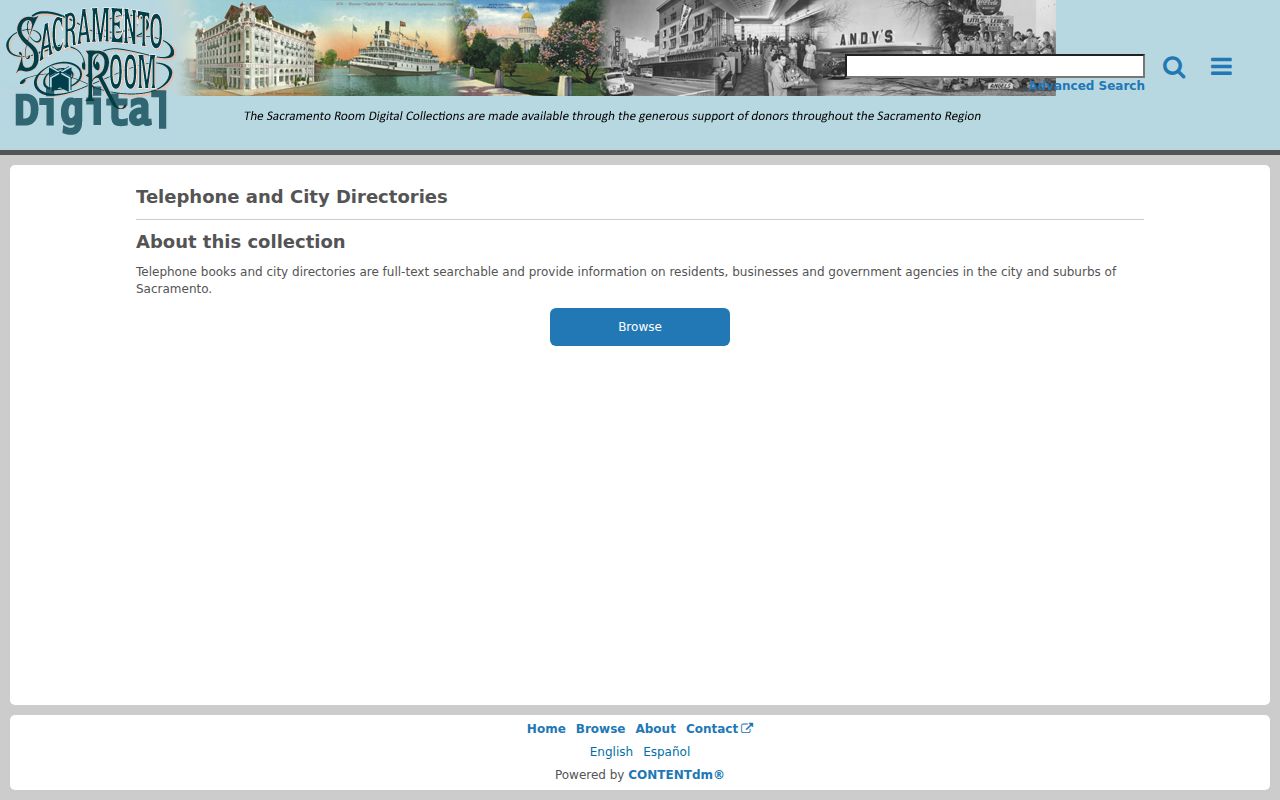
The scan is most useful when its title, year, and geographic scope are recorded before a name match is copied into family notes.
Elk Grove City Directory Shelves
The Sacramento Room local-history collection holds directories alongside yearbooks, maps, pamphlets, manuscripts, and photographs. The room is on the second floor of the Central Library at 828 I Street in Sacramento. Hours listed for research are Tuesday, Wednesday, Thursday, and Saturday from 1 to 6 p.m., with help available at 916-264-2920.
No appointment is required, but an email before a visit helps staff stage vault material. That matters when a particular telephone book, microfilm reel, or directory year is not on an open shelf. The Elk Grove branch at 8900 Elk Grove Boulevard is a local access point for library services, while the deeper local-history material is centralized in the Sacramento Room.
Insider tip. Email the Sacramento Room before traveling. Staff can confirm the exact directory or telephone-book year and stage vault items even though a formal appointment is not required.
The Sacramento Room location details help confirm the current visit plan, contact route, and room setting before a researcher relies on a single online scan.
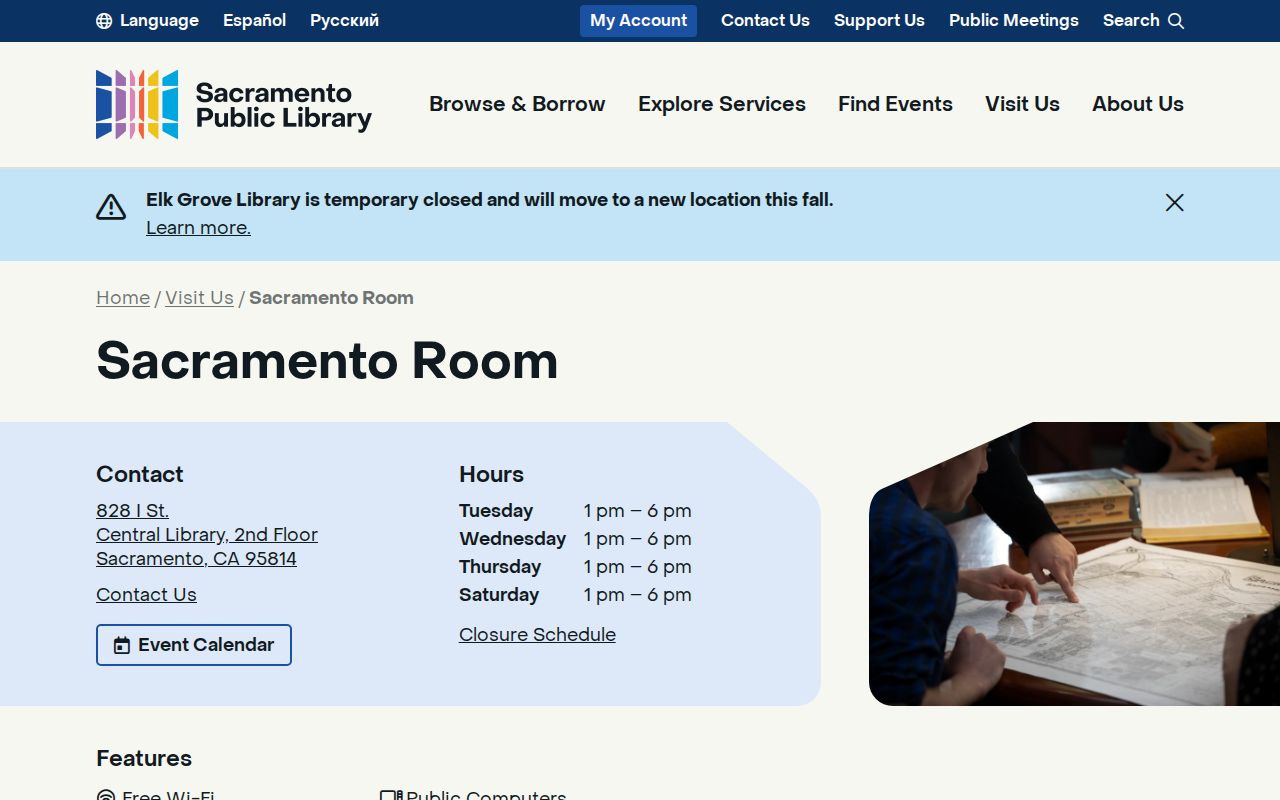
A room visit can expose the catalog, shelf context, and staff knowledge that a keyword hit alone cannot show.
Note: Ask for the volume before the surname; geography and year determine whether an Elk Grove result is plausible.
Elk Grove Digital City Directories
Online searching is strongest when it is treated as a first pass. The Sacramento Public Library genealogy service points researchers to HeritageQuest, Newspapers.com, Ancestry Library, and Digital Sanborn Maps. HeritageQuest and Newspapers.com access follows library card rules, while Ancestry Library is a library-based service. The Newspapers.com World Edition spans 1690 through 2025, so it can add obituary, address, business, and community notices around a directory hit.
The Sacramento Room digital collections provide free web access where a relevant item has been digitized. Search the surname as printed, then repeat with initials, compound-name spacing, prior married names, and likely spelling variants. Older indexes may omit diacritics or reorder names. Keep the source spelling in one note and a normalized search form in another so the two are not silently blended.
The Sacramento Public Library genealogy resources connect the directory search with census, newspaper, military, and family-history databases rather than treating one hit as a complete household record.
Library databases are most valuable when a directory name is paired with an address, an occupation, a spouse, or a dated event from another record.
Reading Elk Grove Directory Entries
A directory entry is a compact set of clues, not a narrative biography. The Center finding aid says entries can contain an individual or business name, residence, owner or renter indicator, occupation, business and address, spouse, and, in early volumes, a place of origin. Later volumes add telephone information. Not every entry includes every field, and a business listing should not be read as a household listing.
Copy the line exactly before interpreting it. A spouse detail, a shortened occupation, or a different street form can separate two people with the same name. Note whether the address is a residence or business address, then compare the next available edition. The printed line is the evidence; an interpretation belongs in a separate note.
| Name | Individual or business name as printed in the volume. |
|---|---|
| Residence | Residential address attached to the listing, when supplied. |
| Owner or renter | A mark that identifies the listed status in volumes that use one. |
| Occupation | Work or trade description recorded for the person. |
| Business and address | Commercial name or business location, which may differ from the residence. |
| Spouse | Spouse clue that helps separate same-name entries. |
| Place of origin | Early-volume detail that can add a migration clue. |
| Telephone | Later-volume subscriber detail where the telephone book supplies it. |
- Criss-cross directory
- An address-first or street-order section that can turn a known Elk Grove address into a listed name. Sacramento-area reverse sections began in 1914.
- Householder index
- A name-first finding aid for locating a household entry when a volume provides that form of index. Confirm its presence in the volume.
- Abbreviation key
- The volume's legend for shortened occupations, relationships, or listing marks. Read it before expanding a symbol.
The Sacramento Room collection description is a sound place to compare these fields with the holdings before assigning a meaning to an unfamiliar mark.
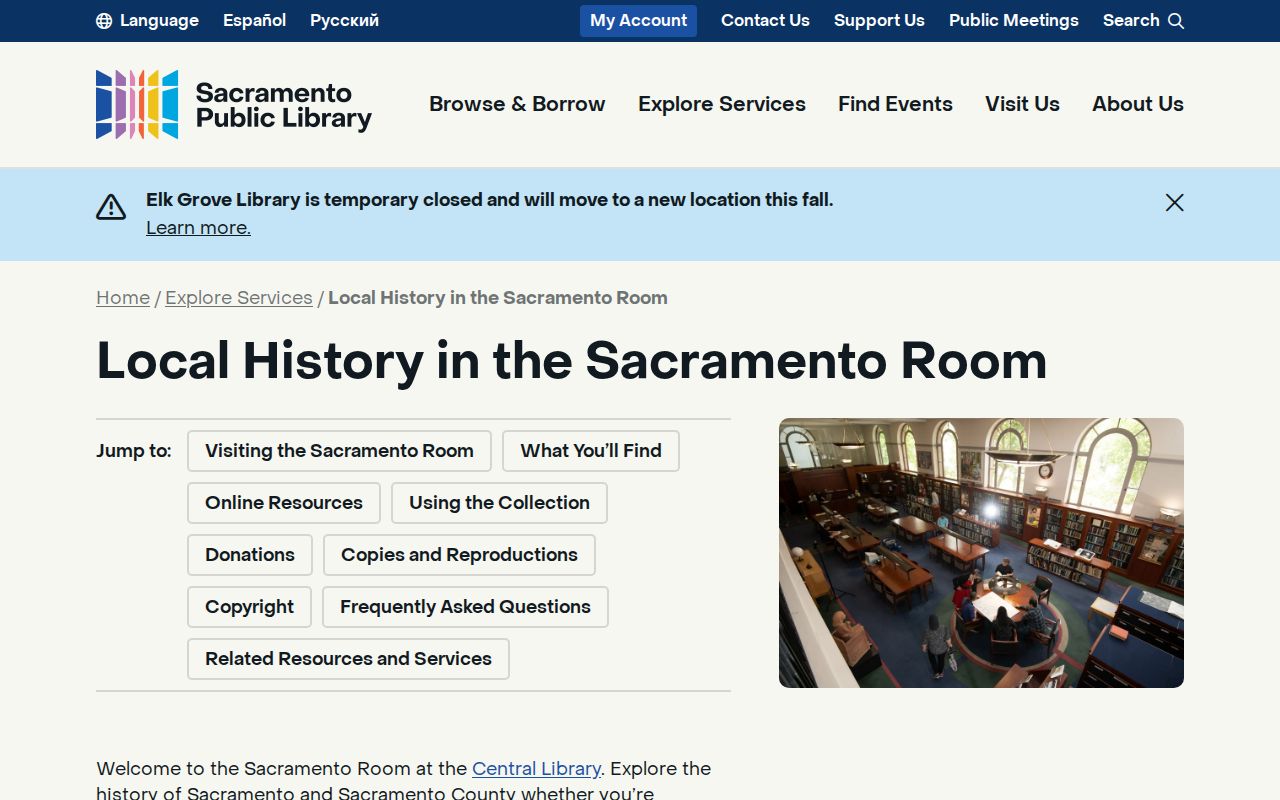
A page image helps preserve the line, the surrounding heading, and the volume context that a copied name would lose.
Elk Grove Reverse Directory Clues
Reverse sections change the direction of a city directory search. Instead of starting with a surname, start with the street and address printed in the reverse pages. Sacramento directories began these sections in 1914, but the available years and suburban coverage still need to be verified in the actual volume. A reverse hit can reveal a listed occupant or subscriber and can suggest which name-first page to inspect next.
Address history requires patience with place names. Lower Stockton Road became Franklin Boulevard, Main Street became Elk Grove Boulevard, and the Bond Road and Laguna Boulevard corridor developed over time. Search the older road form first, then the modern form, and compare a map or legal description before declaring that two addresses are the same.
When a reverse entry points to a present-day parcel, the current address-keyed work belongs with the Elk Grove street address directory. The historical volume supplies an occupant clue; current parcel and deed records answer a different question.
The Center for Sacramento History finding aid documents the 196-volume and 29-reel archive behind this reverse-search method.
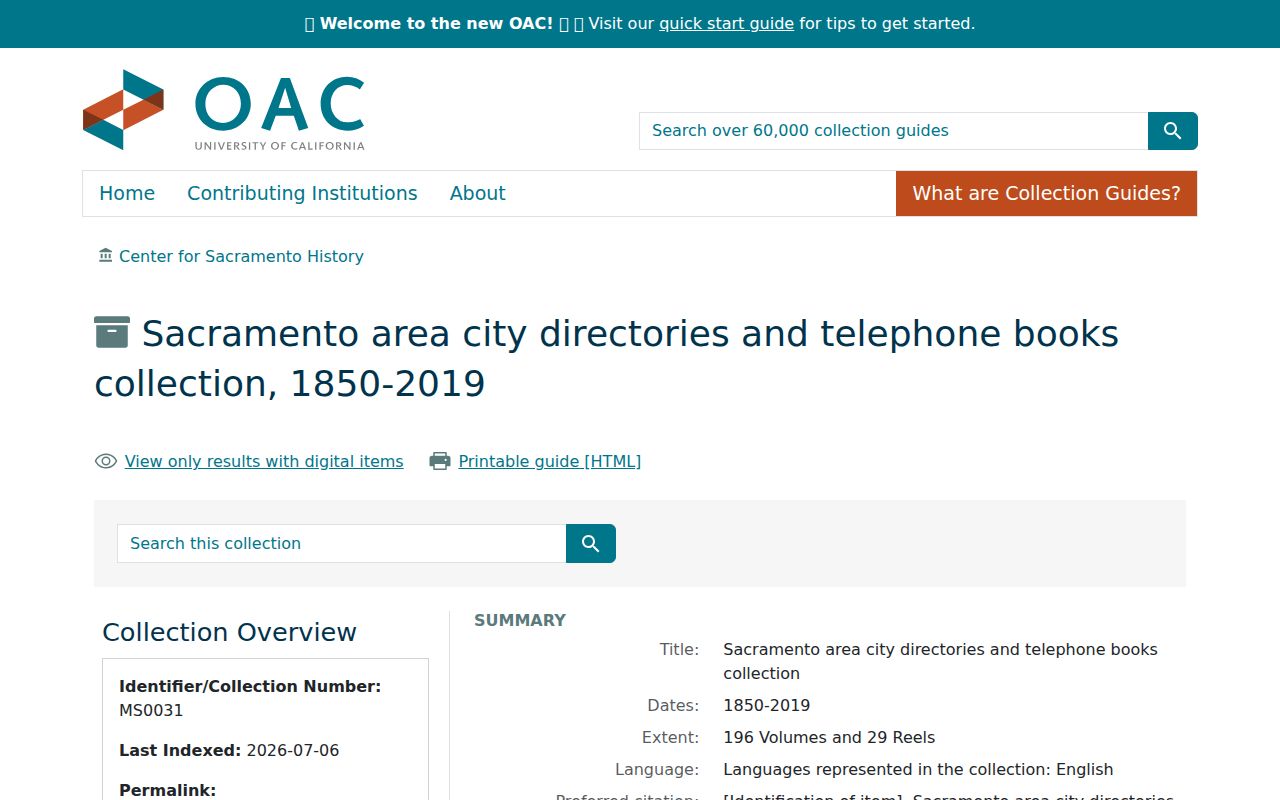
The finding aid is a checkpoint for scope, while the individual reverse page is the evidence for a particular address and year.
Note: A reverse listing can attach a name to an address, but it cannot prove that every member of a household lived there.
Elk Grove Yearbooks and Directories
Yearbooks fill a gap that city directories often leave. The Tom Russell Research Library at the Elk Grove Historical Society has ten surname drawers, files for churches, schools, cemeteries, clubs, businesses, and places, every Elk Grove High School yearbook from 1912 onward, and the complete Elk Grove Citizen archive. Access is by a two-hour appointment. The research library lists 916-685-8115 for contact, and copies cost $0.25 per page.
More than 100 regional yearbook titles are available through library catalogs. They can place a student or faculty member in a school community, show activities and portraits, and give a year to compare with a directory address. Newspapers.com, HeritageQuest, and Ancestry Library can add obituaries, announcements, census clues, or family connections. None replaces the directory line, but each can explain why a name appears, changes, or disappears.
The Tom Russell Research Library description gives the appointment and local-file details for a focused Elk Grove search.
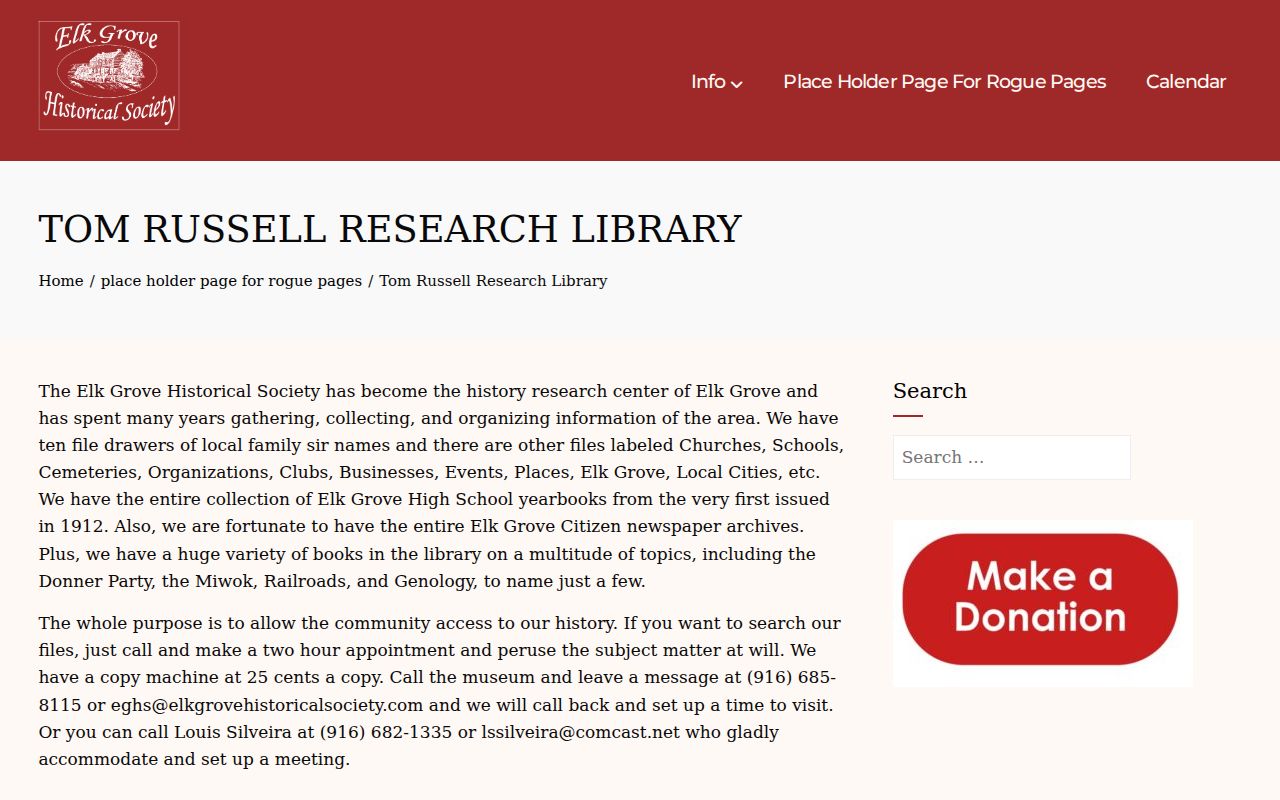
The local archive is especially valuable when a Sacramento-area directory never canvassed a rural or suburban Elk Grove address.
Elk Grove Maps for Directory Context
Sanborn maps help place a directory entry in its built setting. Elk Grove has surviving fire-insurance sheets from 1884, 1891, 1895, 1905, and 1912. The first two editions have one sheet each, while 1895, 1905, and 1912 have two sheets each. The Library of Congress Sanborn scan is free to view. These maps show building footprint, use, materials, hazards, and older street layout. They do not name occupants.
Road continuity is the key. A directory entry on Lower Stockton Road may belong with Franklin Boulevard research, and an old Main Street reference may lead to Elk Grove Boulevard. Bond Road and Laguna Boulevard form a corridor whose development changes the surrounding record trail. Sacramento Room maps from the 1880s through the early 2000s can help bridge those names and subdivision changes.
California State Archives research access at 1020 O Street in Sacramento can add historical state and local-government materials, including selected court, probate, deed, naturalization, and vital holdings. Contact the Archives before assuming that a specific Elk Grove volume is there. The Center for Sacramento History also holds block-study materials from the 1850s onward, homestead records from 1860-1929, county coroner files from 1850-1977, and naturalization records from 1850-1955. Its 1976 pre-1920 house survey concerns old Sacramento city boundaries, not Elk Grove.
Note: A Sanborn footprint can date a structure's form and use, while a directory or deed must supply the person or title clue.
Elk Grove Directory Timeline
The archive's timeline shows why no single directory answers every Elk Grove question. The collection begins before the present city existed, reverse sections arrive later, telephone books extend farther into the modern period, and municipal files start at incorporation.
| 1850 | Sacramento County begins in California's original county system, while the directory collection's earliest year is also 1850. |
|---|---|
| 1860-1936 | Directory microfilm covers this period in the Center for Sacramento History holdings. |
| 1914 | Reverse street and address sections begin in Sacramento-area directories. |
| 1967-2019 | Telephone books form the later series in the MS0031 collection. |
| July 1, 2000 | Elk Grove incorporates, creating a city and county records seam. |
| 2032 | The 1960 federal census is scheduled for release then; 1950 remains the latest public population schedule. |
No publisher name or dedicated Elk Grove directory run has been verified for a particular year. That gap is a reason to inspect the volume, not a reason to fill it with a guess.
Tracing Elk Grove City Directories
A careful city directory search is a sequence of dated comparisons. Begin with the strongest known fact, keep every printed detail, and let the archive show whether the address or name changes. The following order works for a family, a business, or a house-history question.
- Choose a known year and record the name, spelling, spouse, occupation, and address exactly as printed.
- Check adjacent editions. A later appearance can separate a move from a missing issue or an omitted listing.
- Use the reverse section, where present, to search the address and look for another listed occupant.
- Pair the 1930, 1940, and 1950 directory observations with the matching census schedules. The 1950 census is the latest public schedule until the 1960 release in 2032.
- Compare old and modern road names with maps, deeds, or parcel references before treating an address as continuous.
- Use the Elk Grove Historical Society files, newspapers, obituary material, or probate clues to close a household trail.
If a person vanishes, test three explanations: the family moved, the person died, or the directory did not cover that address. An adjacent edition, reverse address entry, obituary, or census schedule can distinguish those possibilities. A directory is strongest when several clues agree across time.
When an old entry needs a current record check, use the Elk Grove resident lookup for an independent source. Do not turn a historical listing into a present-tense conclusion without a dated record to support it.
Note: Pairing a directory year with a census year narrows the time gap without claiming that either source records every household member.
Verify Elk Grove City Directory Leads
The strongest historical conclusions use the directory as one layer. Confirm a name with a second dated source, such as a deed party, census household, newspaper notice, yearbook, obituary, or local-history file. A deed identifies title parties, a census describes a household on one date, and a yearbook places a student or faculty member in a school setting. Each source answers a different question.
Elk Grove's growth makes that discipline essential. An early listing may sit under Sheldon, Franklin, Florin, or rural Sacramento County rather than the modern city name. A later Laguna or western subdivision address may be easier to trace through telephone books, assessment records, and city planning layers. The collection's local scope must still be checked in the volume itself.
The Elk Grove Library replacement at 9260 Elk Grove Boulevard was expected for completion in 2026 while the existing branch stayed open. Confirm branch status before relying on a planned location for a research visit. For deep historical questions, the Sacramento Room and Tom Russell Research Library remain the more specific collection paths.